Housing Starts Fall 4.6% as Mortgage Applications Sink 18% — What October 2026 Buyers Face
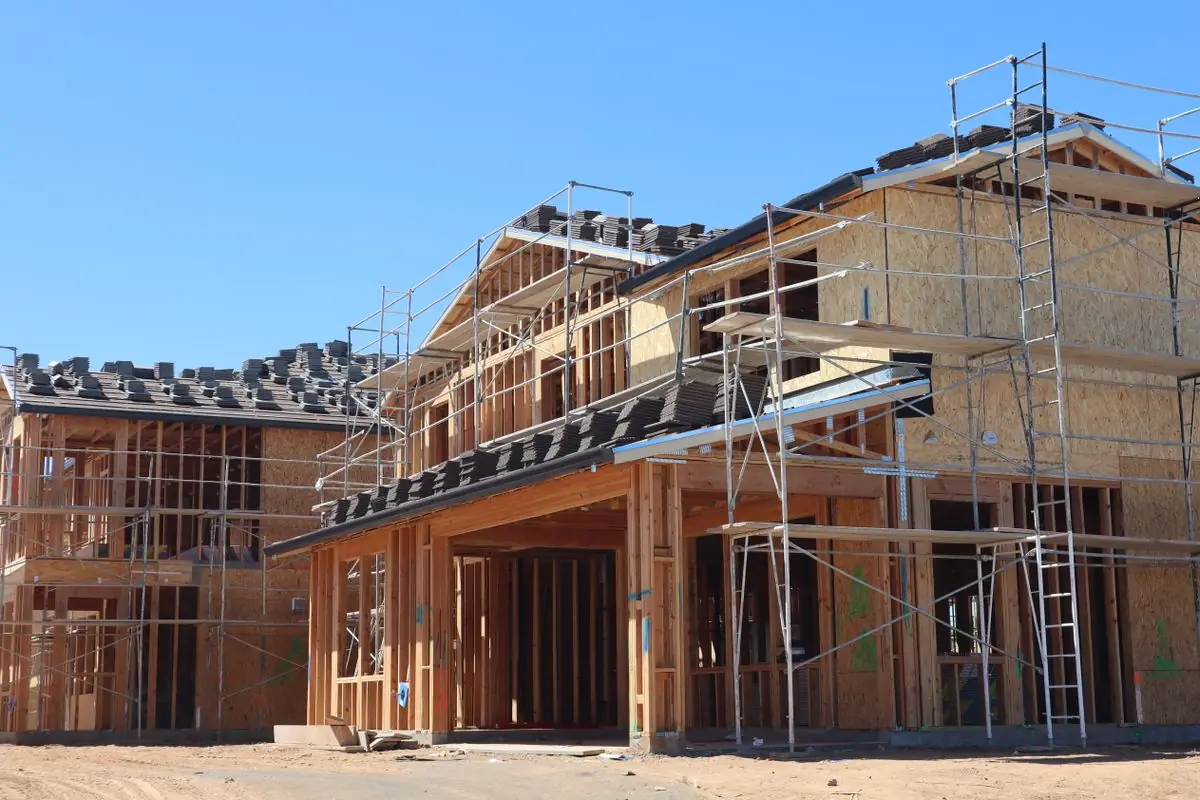
U.S. mortgage demand and home building cooled at the same time this month. The U.S. Census Bureau reported on October 20 that single-family housing starts fell 4.6% in September to a seasonally adjusted annual rate of 859,000 — the lowest since September 2025. And in the Mortgage Bankers Association's (MBA) weekly survey for the week ending October 16, mortgage applications fell 5.3%, with purchase applications down 18% from a year ago — even though the average 30-year fixed rate eased to 7.41%, its first decline in more than two months. The short version: a small dip in rates is not bringing buyers back, because the payment is still near a record high.
Rates now — updated 17 November 2026: Freddie Mac's Primary Mortgage Market Survey (PMMS) put the 30-year fixed at 7.11% and the 15-year fixed at 6.45% in the week ending 12 November 2026 — below the October rates in this report. If your own rate is well above today's, run your figures in our refinance calculator.
Mortgage applications: lower rates, fewer buyers
Start with demand. The MBA's Weekly Mortgage Applications Survey — the industry's standard weekly read on borrower activity — showed total application volume down 5.3% in the week ending October 16, 2026. The purchase index, which tracks applications to buy a home rather than refinance, fell 7% in one week and sits 18% below the same week last year.
That happened in the very week borrowing got slightly cheaper. The average contract rate on a 30-year fixed mortgage eased to 7.41% — the first decline in more than two months. In a normal market, even a small dip pulls sidelined buyers back in. This time it did not, which tells you the problem is not the direction of rates but their level: at 7.41%, the monthly payment is still too high for too many households (the math is below).
Weekly application data can bounce around, but an 18% year-over-year gap in purchase applications is not noise — it is a trend. It means materially fewer buyers are starting the process than a year ago, and most of those missing applications will show up as missing completed sales in the months ahead.
The MBA's Joel Kan put it plainly: "lower rates were not enough to boost application activity... it is very clear that the higher mortgage rate environment has cooled the housing market this fall." When the industry's own economists say lower rates were not enough, the message for buyers and sellers is that this cool-down is about affordability, not sentiment.
Housing starts: builders are pulling back too
Supply is cooling alongside demand. The Census Bureau's September 2026 report, released October 20, showed single-family housing starts down 4.6% to a seasonally adjusted annual rate of 859,000 homes — the weakest pace since September 2025. Total housing starts, including apartment buildings, fell 5.2% to an annual rate of 1.221 million.
The forward-looking number is worse. Building permits — approvals issued before construction begins, and the best early signal of future supply — dropped to their lowest level in more than three years. Builders are not just starting fewer homes today; they are lining up fewer homes for next year as well.
Builders are responding to the same math buyers face: at 7.41%, fewer households can qualify, so fewer projects pencil out. The knock-on effect matters for prices. Fewer starts today mean fewer new homes competing for buyers in 2027 — one reason a cooling market does not automatically become a cheap one. Demand is falling, but so is future supply.
What 7.41% does to a monthly payment
Here is the rate translated into real money, using a $400,000 loan repaid over 30 years at a fixed 7.41%:
- Monthly payment (principal and interest): $2,772.25
- Total interest over the 30 years: $598,009 — more than the amount borrowed
- If the rate were 0.25% lower, at 7.16%, the payment would be $2,704.33 — about $68 less per month
- This is principal and interest only — property taxes, homeowner's insurance and any PMI come on top
It also shows why this month's small dip changed so little. A move from 7.50% to 7.41% saves only about $25 a month on this loan — helpful, but not enough to reopen a household budget that was already stretched at these levels.
Your own loan will differ, so run your exact numbers before you act on any headline. Our mortgage calculator shows the payment, total interest and amortization for any amount, rate and term — try it at today's 7.41% and at the rate you are hoping for, and compare the two honestly.
What this means if you are buying now
Fewer rivals at the negotiating table
Purchase applications down 18% year over year means fewer competing buyers for the same homes. Sellers who would not budge in the spring are more open now to price reductions, closing-cost credits and interest-rate buydowns — and builders with unsold inventory are offering incentives rather than waiting. In a cool market, your leverage is part of the deal; use it.
Affordability is still the wall
None of that negotiating room changes the core problem: at 7.41%, a $400,000 loan costs $2,772.25 a month before taxes and insurance. Buy the payment you can afford at today's rate, with room to spare — not the payment that only works if rates fall. If the numbers only work at 6.5%, the honest answer is a cheaper home or a longer search, not a bigger stretch.
The lock-in effect is keeping resale supply tight
Most homeowners who bought or refinanced in earlier years hold rates far below 7.41%, and few will give that up to buy at today's rate. That lock-in keeps existing-home listings scarce — which, combined with falling starts, means buyers face thin supply even in a cooling market. If you are one of the few holding a rate above today's, run both loans side by side in our refinance calculator. If your rate is below today's, your current loan is an asset — protect it.
The next catalyst: the Fed meets October 27–28
The next test comes within days. The Federal Reserve meets on October 27–28, and mortgage rates move on expectations of the decision long before it is announced. A signal that the Fed is done raising rates could pull mortgage rates down noticeably; a hawkish surprise could push them back up just as fast. If you are deciding whether to lock or float into the meeting, read our lock-or-float guide for the October 27–28 Fed meeting — it walks through the scenarios and a simple decision framework.
Beyond the meeting, watch the two series in this post. If purchase applications stay near −18% year over year while permits keep falling, the market is settling into a low-volume pattern — fewer sales, fewer new homes, and prices held up by scarcity rather than strength. That is a market to negotiate in patiently, not to chase.
Bottom line
Both October reports tell the same story: at 7.41%, demand is cooling (applications down 5.3% on the week, purchases down 18% on the year) and supply is cooling with it (single-family starts down 4.6% to a one-year low, permits at a three-year low). For buyers, that means real negotiating room — but buy the payment you can afford at today's rate. For sellers and builders, it means pricing for the market that exists, not the one from two years ago.
Sources: Mortgage Bankers Association, Weekly Mortgage Applications Survey, week ending October 16, 2026; U.S. Census Bureau, New Residential Construction (housing starts and building permits), September 2026, released October 20, 2026. Payment example: $400,000, 30-year fixed at 7.41%, principal and interest only.
Frequently asked questions
Why did mortgage applications fall even though rates went down?
Because the decline was tiny and the level is what matters. The 30-year fixed eased to 7.41% — its first drop in more than two months — but on a $400,000 loan that kind of move saves only about $25 a month versus 7.50%, leaving the payment at $2,772.25 before taxes and insurance. As the MBA's Joel Kan noted, lower rates were not enough to boost application activity while rates remain this high.
What do falling housing starts mean for home buyers?
Starts are homes that builders begin building. September's 4.6% fall in single-family starts, to an annual rate of 859,000, means fewer new homes will reach the market in the coming months. In the near term, builders with unsold inventory are offering incentives and rate buydowns; longer term, fewer new homes means less competition for sellers — and less downward pressure on prices.
Why do building permits matter if they are at a 3-year low?
Permits are issued before construction begins, so they preview supply months ahead. A low not seen in more than three years says the pipeline of future homes is shrinking: even if demand recovers when rates fall, new supply cannot appear quickly. That is one reason waiting for both lower rates and lower prices is a risky double bet.
Should I buy now or wait for the Fed meeting on October 27–28?
If you have found a home and the payment at today's 7.41% fits your budget with room to spare, the negotiating power you have now may be worth more than a possible small rate dip — and you can refinance later if rates fall. If the payment only works at a lower rate, waiting is the honest answer. Either way, run your exact figures in our mortgage calculator first.
Related calculators & guides
About the Global Mortgage Calculator Team
The Global Mortgage Calculator Team builds the mortgage, HELOC and refinance calculators on this site and keeps them aligned with how US lenders actually price loans. Every calculator uses the standard amortization formulas set out in our methodology, is tested against worked examples before release, and our rate commentary is tied to published data — Freddie Mac's weekly survey and Federal Reserve releases — never to opinion.